
Specialist Ecological Services
Kirby-Lambert Entomology
Services

Terrestrial and Aquatic Invertebrate surveys
Invertebrate survey aims to characterise the invertebrate assemblages present on a site, determine whether any species or assemblages of conservation importance are present, contribute to assessment of site quality and inform planning and management decisions.
I can conduct surveys for both aquatic and terrestrial Invertebrates, using standard or bespoke protocols and employing various survey methods based on project requirements. The output of all surveys will include identification of collected invertebrates, a detailed species inventory assessments of assemblage quality, highlighting of key species or groups and assessment of impacts of any change of land-use or management and corresponding recommendations.
For terrestrial invertebrates, techniques such as sweep netting, spot sampling, beating, hand-searching, pitfall trapping, interception trapping, and suction sampling may be employed. Kick sampling and pond netting are the primary methods used for aquatic invertebrates.
Scoping surveys
An invertebrate scoping survey may be undertaken when habitat features of high potential interest for their invertebrate fauna are identified on a site, often during a Preliminary Ecological Appraisal.
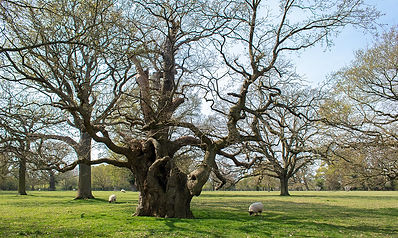
During an invertebrate scoping survey all site features are assessed for their potential to support a good quality invertebrate fauna. Habitat features of known invertebrate potential such as dead wood, open mosaic habitats, bare ground, wetland features and open-structured grassland are thoroughly investigated.
This allows informed decisions to be made regarding further survey requirements to investigate the invertebrate fauna in more detail if necessary.

Species specific survey
Species specific surveys utilise the same methods as general invertebrate survey but target a species (or small group of species) of particular interest. This is often a rare species of particular conservation concern.
The goals of such surveys might be to gather information on the ecology and habitat requirements of the species, assess current population size or distribution or simply to try and establish whether a species is present on the site.
Invertebrate identification
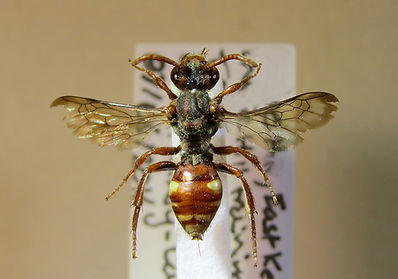
Accurate identification of many invertebrates requires microscopic study by an experienced expert and access to an entomological library and reference collection.
I have a fully equipped entomological lab, large entomological library and an extensive reference collection, allowing accurate species level identification of a wide range of taxa, including most ecologically informative and indicator groups of invertebrates. Furthermore, I teach insect identification and entomological lab methodology on the University of Leeds Biodiveristy and Conservation MSc course.
I can undertake critical identification of invertebrate specimens collected during surveys that may be beyond the expertise or time available to the surveyor(s).

Desk Studies and Writing
I can undertake desk studies, data collation and analysis and specialist writing projects to produce documents dealing with invertebrate ecology and conservation.
Examples of previous desk-based projects include:
-
writing chapters on Diptera and Hymenoptera for the Book "Nature of Cambridge";
-
co-authoring a Cross-taxa Management guide for ancient tree and deadwood habitats for Buglife's Ancients of the Future project, part of Back from the Brink;
-
producing two Important Invertebrate Area (IIA) Profiles, for the Brecks and Fens IIAs